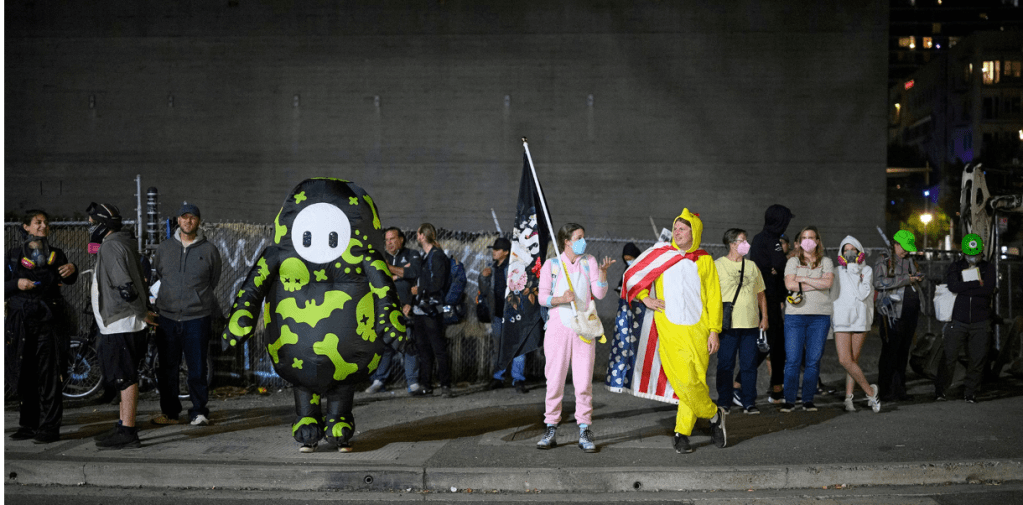
The lost youth of America is a topic that weighs heavily on my heart. When I have been on X and other social media platforms, I often come across images of young people protesting on the streets, seemingly searching for something more. It’s disheartening to see them supporting groups that, in many cases, do not align with their own lifestyles. I find myself asking why they would choose to do this.
Initially, I thought it resembled a gang mentality—when you feel you have nothing, it becomes easy to latch onto a group for companionship and belonging. Take, for instance, a trans person at a pro-Palestine protest; the movement they are supporting may not advocate for their existence or rights. Yet there they are, standing alongside others who share their sense of urgency and passion. This phenomenon is complex; while the need for community is undeniably strong, I believe it might be the primary reason many individuals seek out these affiliations.
When people join these groups, they often feel part of something larger than themselves—a collective purpose that transcends individual struggles. But this raises an important question: how can we help bring back our lost youth? In my reflections, I keep returning to the idea of nurturing strong households and communities built on shared beliefs—whether that’s through faith in something greater than ourselves or simply engaging in meaningful conversations about our values.
I understand that this perspective may seem simplistic or even “uneducated” in some circles. However, as we observe our society drifting further from these foundational elements—strong families and supportive communities—it becomes increasingly clear that many young people are turning toward tribal groups as substitutes for genuine connection and understanding. It’s essential to recognize this pattern if we hope to guide them back toward paths where they can find true meaning and belonging in life beyond mere affiliation with fleeting movements.
 Common Sense Party
Leave a comment